
Episode Transcript
Pod Episode 16 Sarah Renieri
Kyle:
Investment advisory services offered by Moneta Group Investment Advisors, LLC, an investment adviser registered with the Securities and Exchange Commission. Registration does not imply a certain level of skill or training. The information discussed in this podcast is for informational and educational purposes only and any endorsements were those of the hosts and not a guarantee of employment. No compensation was provided. You should consult with an appropriately credentialed professional before making any financial, investment, tax, or legal decisions.
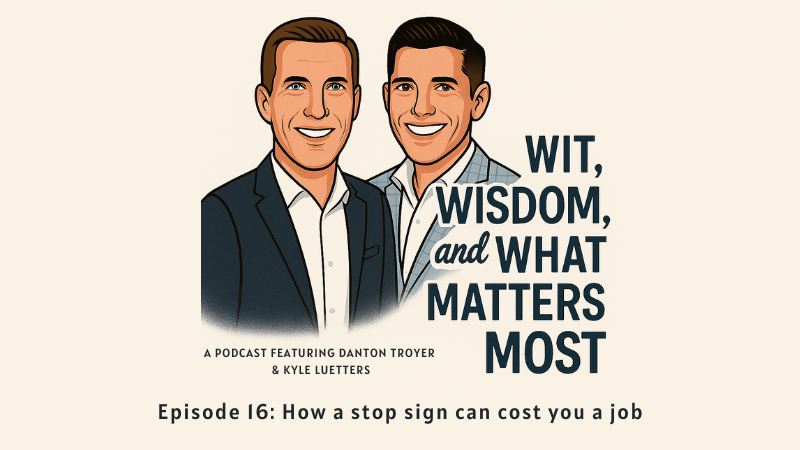
And welcome to another edition of Wit, Wisdom, and What Matters Most. It’s a podcast by Moneta’s Gast Freeman Troyer Racen Team. My name is Kyle Luetters, an advisor on the team, joined by Danton Troyer, one of the partners.
Uh, Danton, it is a new year. Everything’s bright, shiny, fresh, new, and today’s guest I think is someone that many folks, as they’ve gotten through the holiday season and have contemplated a full 12-months slate in front of them, potentially a job change is on the horizon and Sarah Renieri, who is the manager of talent acquisition here at Moneta, joins us today for a very far reaching conversation.
Danton:
Yeah. We’ll talk about everything from how to use AI on your job search to how not to use AI on your job search, as well. Then everything again, from internship programs to a C-suite and what’s the best steps to really lock down a job there. And, starting the new year, a lot of people will be either looking to hire and fill out a team and also maybe some RC suite clients might be, you know, looking to make a change as well into the new year.
Kyle:
And with that being said, here’s our conversation with Sarah Renieri.
And we are now joined by Sarah Ranieri here on Wit, Wisdom. and What Matters Most. Sarah, first off, welcome to the podcast and thank you so much for sitting down with us today.
Sarah:
Yeah, thank you so much, Kyle and Danton. I’m so happy to be here. I’m very excited to be here today.
Kyle:
Oh, perfect. We’re going to cover a lot of topics today, but, but really before we get started, we like to dig into the backstory and the personal side of things.
So, you are in talent acquisition here at Moneta. So how did you get into that? Because I don’t necessarily remember going to orientation at college and that being one of the choices there. You know in all transparency, there was a guy that I knew that tested the windshields of airplanes by like firing chickens at them. That also wasn’t on those, but how did you get into talent acquisition? Kind of give us the arc of your career.
Sarah:
Yeah, absolutely. So it’s interesting. I listened to a podcast called the talent acquisition leaders podcast. Every person that they interview are experts, senior level in talent acquisition, and they all fell into it. That’s always their story. And I would say mine is similar.
However, something that’s unique about my story is that when I decided I wanted to be in talent acquisition, I was very intentional. I knew that that was game changing for me. I wanted to go into that, that arena.
So my story, I actually started within accounting. So I got an accounting degree out of college and I worked for a couple of different internal corporations. So I actually did work for a nonprofit organization; I did work for a large commercial real estate company, all within accounting. So, at the time I was really able to start articulating the type of company I wanted to work for. I got a really good exposure of all different arenas.
And so that’s what really brought me to Moneta. It checked all of the boxes for me in terms of the size of the company, culture, the structure that it provided, the training, and long-term career opportunities. So when I started at Moneta, I started as a client service manager.
So I was helping to support financial advisors, such as yourselves on client-facing teams, managing existing client relationships and really becoming an expert at the foundational business of what we do. After doing that for about six years, I was actually given the opportunity, for my team specifically, to help with our recruiting efforts. And I loved that opportunity.
I kind of volunteered. I raised my hand. I said, I’ll be the one to vet the resumes. I’ll be on the side Googling what are appropriate interview questions to ask these people. And the advisors on my team loved it. They really wanted nothing to do with the process; it’s tedious, it’s not their expertise, and they had better things to do. Their priority was the clients.
And from that, an opportunity arose within the firm to help lead and develop our internal recruiting team. So I happily took that opportunity. It was a unique career path as most client service managers proceed into that financial advising path.
But for me, I really knew that this was a really strong fit for me, given my skillset, what I enjoy doing, coupled with the expertise that I had grown up within the firm. I knew the culture, I knew the skillsets we needed to do all of the roles across the organization. This was also a time when Moneta was expanding outside of St. Louis for the first time. So this was about 2018, when we made that transition. So that was also really wonderful time and where I got to make an impact, not only for our hiring needs in St. Louis, but across the nation. So our first office in Denver is when I got a taste of how to, how to recruit for a company where no one really knew who we were, what we did.
Kyle:
Wow. And how long at Moneta now?
Sarah:
So it’ll be 13 years this month.
Kyle:
Holy moly.
Danton:
Yeah. Well, I think one of the things that I found maybe a little unique and interesting was you’re certified in the Workplace Big Five. And so maybe talk a little about that.
And first off, you know, why that one? And then how do you really see personality fit and developing a team, and how does that really play a role?
Sarah:
Yeah, absolutely. So the Workplace Big Five is a personality assessment and it’s one of those assessments that Moneta has used for a long, long time. It itself has evolved over the years.
I actually – this was pre-COVID, I had just, I was celebrating my daughter’s first birthday and I was actually, on her birthday I was traveling to North Carolina for a three-day seminar certification training to get this certification. So that was very memorable.
It’s something people aren’t really doing that much of anymore, that kind of travel. And yeah, so it was very involved, very rigorous learning more about personality types and more importantly about people’s motivations and competencies. So we all have kind of these natural tendencies, natural personality types, such as introversion versus extroversion, your ability to be curious, or maybe you’re more narrow-minded and these all are just what come natural to you. But it doesn’t necessarily mean that that’s what you want or that’s your motivation. It doesn’t always correlate to the things that you want to be doing where you’ll find fulfillment.
So, the Big Five assessment is something that we do administer to all of our senior-level advisors, any kind of executive-level hiring needs. So we do use that to really dive into a candidate’s motivation and skill set.
For all of our candidates across the board, we do use the Wunderlich assessment. And that’s another one that Moneta has always kind of consistently used over the years. And it takes it one step further. It’s like a high level Big Five, but it also measures a candidate’s cognitive ability.
And we do, as a firm, we’ve always placed a lot of emphasis on the cognitive piece in terms of best fit and how long-term success you’ll have in the role, given the challenges that we face on the day-to-day in terms of our analytical, critical thinking skill set.
Kyle:
I remember taking that test on the way in here going, wow, this is the same test they give the NFL quarterbacks at the Combine.
Sarah:
It is exactly the same one.
Kyle:
Perfect. I did reasonably well on it, but I don’t have the physical attributes that they do. So that’s why we do this.
Danton:
We didn’t test your 40-yard dash.
Kyle:
Oh, gosh.
Danton:
I mean, we got the hallway going, though, right?
Kyle:
Yeah, we could do that. I just got to change my shoes. No, I mean, that’s a fascinating way to peek behind the curtain, because one thing I will say, candidly, it is tough to get in here as a job seeker.
So, you know, talk about how you go about recruiting for this firm, knowing that you’re really looking for a very specific skill set. And that’s got to be a challenge. I mean, there’s a lot of people out there, but finding the right people to basically bring in through the door…walk us through the challenge of that.
Sarah:
Yeah, absolutely. And to give you more context on that, as a company, every year we typically receive about 4,800 applications to the firm. We typically hire about 100 people year after year.
And so our acceptance rate, if you will, is right about 2.9 percent, which is lower than Harvard’s. So we have a higher standard than an Ivy League school when it comes to the talent that we hire here at the firm.
So, yes, it is an extreme challenge, probably one of the more challenging things about my job. And a lot of it is the partnerships we develop with our hiring team. So I’ve learned so much from our hiring managers in terms of what they look for and what’s going to really make a successful hiring decision.
So their feedback is integral into what I do. So I compile that feedback and I’m learning and growing with every candidate that I talk to, kind of hearing from the hiring managers what they’re needing right now – and that market kind of shifts and changes as well; that evolves.
Maybe they have several people on their team that have this skill set, but they’re lacking this skill set. So now we’re trying to find that missing puzzle piece.
So all of those little factors come into play. The assessments test, we do help and we kind of do that upfront screening. So while we’re managing this volume, we have to do that efficiently and effectively and timely.
And we’re also a very small but mighty team of three doing this work. So, you know, filtering through the candidate inbox and then identifying the key traits from a resume. We’re looking for professionalism first and foremost, that will always narrow down the pool a little bit, as well as then we provide these assessment tests and that will, you know, gauging on those scores coupled with other things we might know about them.
Often, too, I would say the our most common and successful pool and pipeline of candidates come from our referrals; about over 50 percent of our candidates come from referrals. So that is also a really wonderful network that we’ve established.
So any referral I get across my desk, I’m always going to be reaching out to that person.
Danton:
I guess my question, where are you getting these referrals? I mean, that seems like the best place, but obviously there’s a limit to that as well. So I’m curious where your most successful referrals – is it internal? External? How’s that been beneficial for you guys?
Sarah:
Yeah, certainly internal. And it’s always a good validation because we will get internal referrals from existing employees, maybe in the role already. So they are clearly very fulfilled and loving their job in the company enough to refer a close family member or a friend. And a lot of times, it is family members. So I think that’s really a great testament to our teams and the work that they’re doing, and the kind of career paths they’re providing. So those are often the most successful – our internal.
We will occasionally get external people within our network, sending people our way. We’ll have competitors share candidates with us that might not have been a good fit for them, but they said, hey, you should check out Moneta. So we’ll look into that.
I have recruiters – right now I have an email from a recruiter who said she has an intern candidate that she was hoping to find a good home. And she prefaced with this: I’m not expecting a fee at all. I just want to find a good spot for her. And I know your firm will deliver on that.
So, again, I think that’s a really cool thing to have.
Kyle:
I really want to commend you having been involved with the interns the last two years. You all do an excellent job of getting a lot of very curious, young, motivated people through the door. Again, knowing that a lot of folks apply for this thing, we really do get a great number of candidates that ultimately become interns here. And really the amount of work you all have put into the selection process, but also to the build out of that entire process so that they leave here – in fact, one of them got hired here at the end of it, which I think has got to be a cool feeling for you all just to kind of see that ecosystem or that circle fully complete itself.
Sarah:
Yeah, absolutely. And that’s our main goal of that intern program, right.
So for summer of ‘25, about 40 percent of our interns were either hired full-time or came on in another internship capacity for the firm going forward. So huge success there. We’re hoping that we continue to increase that momentum. To us, that’s the whole point of the program. And it’s to your point, Kyle, we see some incredible talent at that new college grad level. Those interns are one of our strongest assessment test scores.
They’re already in it; they’re used to that kind of environment. And, you know, we’ve had our own interns on our team and they’re just an incredible talent. They’re very eager to work. They really want to contribute to the company, make an impact. They’re phenomenal with technology in ways I never dreamed of.
So it’s certainly a wonderful talent pool. And it’s one of our largest. So if you think about interns at the undergraduate level, there’s a lot of those people. The pool narrows as we grow in experience and tenure. So trying to find someone with three to four years of direct industry experience is a lot harder than tapping into a new college grad. So we’re always promoting to hire that new college grad if you can.
Kyle:
Yeah, 100 percent there. And like I’m going to start to age myself just a little bit, but when they do come in, to your point, number one, they’re very good with technology.
Two, they also bring an energy into the workplace that sometimes, not necessarily always, is missing. But when you have someone new and someone that’s really got a lot of giddy up and go, if you will, just such a cool thing.
We were talking a little bit before we got started about busy times of the year. So as we’re having conversations with folks, we work with clients all the time that maybe they, in fact, I’m thinking of a conversation that Danton and I had yesterday with a client that says, I think I’m probably going to start looking for a different job. Kind of walk us through now maybe sitting on the other side of things like you do amazing social media content around job searching, negotiations, recruiting. Walk us through what are some of the things like if you were talking to that client that we had in here the other day, professional, has done very well, but just looking for a different role.
What are some of the tips or what are some of the things that you would recommend someone in those shoes do to make themselves an attractive candidate?
Sarah:
Yeah, absolutely. I would say, too, there’s a lot of noise about the market activity. When’s the candidates’ – right now it’s a strong candidate market versus a strong hiring team market. I would say try to block that out as much as you can. And you really need to be intentional throughout this process for your own benefit. So come to the job search with your own game plan, your own strategy.
We’re not trying to time the market, just like we wouldn’t try to time the market with our investments. So very similar to that. There’s a lot of media, a lot of misinformation as well, so try not to get overwhelmed. And I would block out all that noise, especially if you are needing to take this seriously in terms of pursuing something new.
And my first recommendation to get started is revisit your own personal brand. So to your point, Kyle, talking about the online social media videos I like to post out there, that’s just been a natural involvement for me as I have been in this business now for seven years. All of the really interesting feedback and best practices I’ve learned over the years from candidates and hiring managers alike, it’s created this library of content that I’m kind of like, someone has to hear this. So I like to put it that out there.
And so I would say focus on what is your personal brand look like right now? What is your reputation? Do people know what your expertise is? Is your network aware of your career goals long term? And if not, we need to really start there.
The unique thing about an executive level career search is that it’s not as tactical as you would see for like a mid-entry level type person. Those people are applying to job boards; their jobs are posted. The interview questions are competency based, pretty cut and dry.
This situation, like with your client, I would recommend they avoid job boards altogether. Most of the time, the type of role that they’re looking for or seeking, that’s not going to be posted. For example, at Moneta, we don’t ever post a partnership level role. We’ve never posted a chief or executive level role, and yet we’ve hired several of those people in the last two years. So it’s for our purposes, we’re really already kind of identifying that person that we wanted to add to the firm. We might have a problem for them, but we also are more like, no, we know your skill set, we know your reputation, and we want you to come contribute to Moneta and see what you can do here with us.
So that’s going to be how this type of transaction for this person is going to evolve. So, if they don’t already have that strong network, I would recommend starting there and that will further set them up for success when they are in that job market.
Danton:
Part of our conversation with him was that he had two offers and he was evaluating, and it sounds like he made the wrong choice. So, you know, are there things that you see – either just questions or things to look for, to avoid kind of that picking the wrong spot, especially in that type of role? It’s not easy to make a change. So you want to be right the first time, but that’s not always…maybe easier said than done.
Sarah:
Yeah, absolutely. And that’s great advice. So I would say in this type of search, it could be a six to eighth month process for someone with this level of experience.
And that’s why I would recommend before you’re even thinking about the actual taking action on your job search, you really need to be very clear about what it is that you want to do next. So be able to articulate that. Think about your strengths and your weaknesses, your areas of development.
Think about the goals you want to achieve, the impact you want to have going forward somewhere else. And it might not be a job that’s out there right now. It might be you talking to people and that person taking a risk on you and saying, no, let’s see what you can do and we’ll talk about the job title and job description afterwards.
And that’s how a lot of those people are hired here at Moneta. And so that’s the homework that I would start with first is being really strategic about what it is that you want to do next.
And if you’re kind of lost, or maybe this is an individual that’s been in the same career, the same company for 15 years, this is brand new. So in those situations, I would absolutely recommend look at assessment testing. Often those tests will help clearly define what your strengths are.
And even in some cases, in my perspective, I have some weaknesses that I consider weaknesses. Well, these assessments tell me, no, that’s actually a strength; no one else is good at this, but you.
So that does help shift that perspective. Another really great resource I would recommend to this type of level would be enlisting a life coach. So again, if you’re struggling with, I don’t really know what’s next for me.I know I have a lot more to offer and I’ve kind of run my course where I’m currently at.
I have talked to several great professionals that are life coaches and they bring in those assessments. They do a lot of surveys. They prep you for the interview process to really build your confidence and really help narrow down your focus.
Danton:
That’s interesting; I wouldn’t have thought of a life coach as far as, …but it makes perfect sense when you’re saying it, but that’s not what I would have thought of.
Kyle:
So I think those are all fantastic. I agree with Danton, bringing in the life coach, taking various assessments. I know here at Moneta we use DISC a lot to identify strengths, weaknesses, so on and so forth.
Walk us through, let’s say the hypothetical person has identified a role or a company has identified them. Let’s go into the negotiation table. So what are perhaps some negotiating tips? I hesitate to say tricks. We just got done with Halloween not too long ago. But what are some of the things as someone sitting down to negotiate a job offer should be aware of or that you’re seeing out of the marketplace now?
Sarah:
Yeah. And I mean, like we all know everything is negotiable. So start there.
The other place I would start with is when you’re going into this process. Okay, once we’ve narrowed down, I know what I want to do next, put some monetary number to your value. Really have a clearly defined expectation of what you’re worth, what the type of role and the work you’ll be doing, what that’s valued at.
And you can do that through several different ways. You can start with asking ChatGPT and look at the market you’re in. I would also recommend in addition to that, maybe paying a service or a fee to find that information out. You could even reach out to other professionals that are in that industry.
Maybe it’s a different market, too. So you’re kind of understanding what’s the cost of living and ask if they would be transparent and share the range that they’re at and making sure that that aligns with what you are thinking about. So have that number, that range up front.
And I would say, you know, stick to that. And as you’re having conversations then with future employers, you can be really clear about this is my expectation.
I would also, when you get to those informational interviews, be very upfront about that as well. Don’t wait to the very last minute when you’re in that kind of negotiating phase to articulate what it is that you’re seeking. And it’s a little bit trickier at this stage too, right? Because we’re not going off of a job description where there might be a range posted on it. It’s probably a natural evolution. It might be an opportunity that they’re really crafting and creating for you. And you might come across some organizations that are kind of like, we don’t really know what we should pay you, but you tell us what you want to make. So you’re kind of in charge there as well.
So for all these reasons, I would do a lot of research on the front end, be ready to talk about it earlier than later. And so when you are in that negotiation phase, it’s not so argumentative.
It’s really kind of a natural evolution of we both want this to work out for both sides. And then when you think about those negotiation factors, think about what’s going to be your priorities. And it might not be all tied to compensation.
So I’m curious, have you had conversations with clients or had any kind of feedback or guidance you’ve given to them when they’ve gotten into the negotiation phase?
Danton:
Yeah. I mean, we’ll get offer, we usually get maybe asked questions a little bit at the end where they’re kind of like, is this a good deal or not? And maybe more importantly too is like, does my financial plan work with this or not?
That’s a big thing that we get brought into. I’ll shorten the story, but I had a gentleman, he was a C-suite and I met him in between jobs. So he was actively looking and he got a job and I forget the details, but the salary was well below his expectation.
But then we started walking through all the other perks, if you will. The location was where he wanted to retire. The job was exactly what he wanted. The pay was just not there. And we took a step back and said, does the pay really matter at this point in your career? And the answer was, well, no, I’ve already, …he could have literally retired that day and it would have been fine.
So he took a step back and, I won’t take all the credit, but he was able to take that job and basically then enter into retirement in a way that made sense for him because he was still making good money and he got to move closer to where he wanted to retire. So I think taking a step back and, certainly compensation matters, but there’s other factors as well. Making sure it fits in with what you actually want.
So I think that was one of the times where I was able to maybe influence it more than others.
Kyle:
Yeah. And then I think to Danton’s point, especially when you get to this level, money is one thing, but to what you were alluding to, what’s the quality of life look like, the perks, so to speak, equity compensation also to factors in in a big way, because it’s not necessarily maybe money right up front that a company has to give out. It almost can be tied to performance in a way as well, too, so it’s an easier way for the company to add that in there as well.
So, you know, those are the types of things that we see -is very similar to we may get brought in very early in the process, or we may get brought into, for lack of a better term, bless, if you will, what they’re seeing on the piece of paper. So, just fascinating conversations.
I’m going to ask a little bit of an oddball question, so don’t be alarmed. To the extent that you can, what are some of the oddest things you’ve seen in your time in recruiting and trying to bring on talent? Either things that folks have sent you or things that you’ve observed? Is there anything that really jumps up that was just odd?
Sarah:
Oh, several things, unlimited things. Absolutely. And probably not so much at this level, the executive C-suite level where that’s not nearly the volume that we’re encountering as we would entry to mid level.
So the entry to mid level, we’re seeing candidates, one thing that we’re really passionate about is visiting college campuses and having conversations with our internship program. We do a talent acquisition, learning lesson/learning session with our internship program every summer. Most of that is all centered around how you act professionally within an interview presence.
So your presence professionally – in person or over video. That’s a big – can be an immediate write-off if you’re not careful with how you’re coming across, whether you’re in person or on video. So we’ve had several instances of crazy hair and makeup and really poor, unprofessional backgrounds.
I talked to an intern candidate who, he was calling me from his college dorm room, which that’s totally fine. Just, you know, please make your bed behind you or maybe blur your background. Well, this individual had a stop sign proudly displayed against his window and sure, we were all in college, everyone knows we steal stop signs, you know, street signs. But I pointed it out and asked him about it directly. Like, what’s the meaning of this behind you? He kind of glazed over, gave me some vague response, it was not his, but it was an immediate no for him. Everything else was great, but he immediately lost the opportunity with Moneta because it’s kind of like, well, I’m not going to hold it against you that you’re a college student, but I am going to hold against you that you’re not smart enough to have a professional background behind you when you’re having this video call with me.
So it’s those, the small details that really make a big difference in what is always a very competitive market wherever you are. So the candidates that really shine, they’re the ones that are taking this process very seriously. Every interaction that they have, they really set themselves apart because they’re professionally dressed or prepared. They can clearly articulate their elevator pitch, what they’re looking for. They’re not telling me, oh, I’m just open for opportunities. But that’s really hard for me to go on and we want people that want to be here.
So, yes, I could go on about the stories, but yeah, I think it’s the small details that really, really matter. Yeah.
Danton:
Well, I think maybe my last question is, and you kind of hinted on a little bit, but what have you seen as far as just changing? I mean, we talk about like video interviews. I mean, when I started interviewing, that wasn’t, you showed up. The world has changed just from an interview perspective and I would think there’s different difficulties.
Like that guy has a stop sign in the background – that wasn’t an issue for me in college; you went to the place and it was fine. So what are some of the changes you’ve seen over the years and how can people who, especially in that case, maybe it just wasn’t thinking and obviously that’s part of the problem… but what have you seen that people should keep in mind as the interview process has changed and adapted to that?
Sarah:
Yeah, I would say now more than ever, we’re all very accessible, so I rarely hold it against somebody if they’re running a little bit late or if they’re a no show, but they are apologetic on the front end about it. You know, life is busy. I understand often these are gainfully employed people that might have children at home and maybe they’re even taking time off to have a 30-minute conversation with me. So I’m going to be really respectful of their time as well. However, that being said, a quick, we can text back and forth. We send text messages out to our candidates. So there’s a lot of great, easy mediums to be able to get ahold of somebody right away.
And I would say too, so those video calls, they’re really efficient. So we tripled the amount of screen calls we were having with candidates during COVID because we switched everything to virtual.
And so I was able to have that many more calls during the day. And so to get a lot more work done from that perspective, but it did twist – it’s very rare that I have an in-person interview with a candidate. The hiring teams are always having the in-person. In the screening process, it’s very rare that that’s an in-person opportunity.
So as a candidate, when you do get that opportunity to meet a professional in-person, I would say, treat that, be very intentional with that entire process. Do those things like maybe I’m going to drive to the location the day before to get familiarized with the area and make sure I know where to park. And we’re in Clayton and downtown, and it’s very chaotic to park around here. So those are some things where it’s going to be, again all about taking advantage of that one opportunity that you have and making sure that nothing goes wrong and being very, very prepared for it.
Yeah.
Kyle:
I love that. And as we go to land the plane here, I would be remiss if I didn’t ask. AI is everywhere in the headlines. It’s everywhere seemingly that we turn right now. How do you see, or how have you seen AI impact what you do in talent acquisition?
Sarah:
Yeah, I mean, it’s been game changing. I would say from an internal perspective, it’s really helped with efficiencies for us. And so we use it for our note-taking for screen calls, which has been so nice that the AI function is recording the call, summarizing the notes, it can then shift it to, okay, now here’s feedback for the candidate, here’s feedback to the hiring manager…all of this lift that I would have had to do manually frees up a lot more of my time to be focused on the candidate during that conversation.
So those are things that we’re using it for. We, from time to time, depending on the role, we will use AI to filter through our candidate application.
We posted a data engineer role. We received probably 900 applications in an hour because it’s scheduled. These candidates, a lot of them are international, have it set up to where their AI bots or agents will automatically submit a resume for any data engineer role that posts. So our technology team got involved with that and they said, we’ll filter this and find the person we need. Of that 900 resumes, we literally only found one person that was local, a US citizen, and could do the job. So just that was interesting in itself.
So we are seeing a lot more AI written resumes, AI written cover letters, and it’s really easy to spot them.They all are written the same way. So I still, I tell our young college population, if you’re going to use it, use it wisely. And I think use it again to make the best use of your time.
So start, have it help you build the content, but then revise it. Have it help you practice for your interviews. So you can do a Q and A back and forth with AI. Hey, I’m interviewing for this job.What are some questions I should expect to answer? So those are all really great uses of it, but don’t let it try to do the whole process for you. We’ll have candidates that will be reading off of their AI script to the side during the screen call.And we’re kind of like, okay, well, this is going nowhere.
So there’s things, situations like that where you use it as a crutch and you need to be able, thoughtful with it. And, you certainly should be using it to build that skillset, but use it in a very intentional way.
Yeah.
Kyle:
Well, I, I am infinitely smarter than I was at the beginning of this conversation and that’s kind of the point here, but Sarah, I really want to thank you for joining us today. This has been incredibly insightful and especially helpful for a lot of folks that are listening out there that may be contemplating a job change or that want to be an intern at Moneta, which we would highly recommend and endorse.
So again, thank you very much.
Sarah:
Thank you both. It was a pleasure. Thank you.
Kyle:
And that was our conversation with Sarah Renieri, talent acquisition extraordinaire here at Moneta. And Danton, I found the conversation wide ranging, but also incredibly insightful. I mean, we talked interns, we talked C-suite job seekers, we also talked AI. What are some of the big things that jumped out at you from this conversation?
Danton:
I would have to go with the AI and I knew she would have some examples, but I think going through and listening to some of the specific ways people have maybe abused AI in their job search, as well as how to use that more efficiently. So, and I think that’s in general, just how to use AI; you can’t use it to as a crutch to solve your problem, but you can get some pointed in the right direction. And I think that’s how you need to look at AI as it relates to the job search as well.
Kyle:
I would agree there, too. I also found too, when she turned the tables on us and asked us questions, especially the things that we had sen, and I wanted to drive back to that because I think many times in negotiations, we, I think it’s human nature, we always focus on like what the dollar figure is, what is the compensation coming to me in exchange for the task. But we really dove into some of the perks and you also dove into things like quality of life, and so on and so forth and, and where a financial plan integrates in with that.
And we see that often.
Danton:
Yeah. I mean, certainly helping people think beyond just the numbers there. They’re very important and that is definitely part of the conversation. Most C-suites can figure out a dollar amount of their salaries, that that’s not the difficult part.
But can they make that in the position they want? And then it’s usually not as straightforward as a salary. There’s usually many components to it and trying to evaluate that can get complicated.
Kyle:
It can get very complicated when you start talking about just the regular compensation, as well as potentially equity compensation, additional perks. Do you get a company car? Is there a car allowance? A whole host of things that really can roll into it.
But, again, a far reaching and very informative conversation. And, please be sure, we alluded to it in the podcast and mentioned it, but go ahead and connect with Sarah on social media channels. It’s Sarah Renieri. Last name is spelled R E N I E R I. Her social media content is exceptional. She does a lot of videos, a lot of informative posts. So whether you’re someone in HR looking to recruit talent, or if you’re actually out there seeking a new role yourself, her tips are extremely timely and helpful.
Danton:
I think just following her on social media, you’re going to get some extra tips and this conversation alone was extremely valuable – from anybody looking for an internship, but then also those C-suites who may be influencing their own internship program. She’s got a lot of resources around both sides of the spectrum.
Kyle:
Couldn’t have said it better myself.
And Wit, Wisdom, and What Matters Most is produced by Moneta’s Gast Freeman Troyer Racen Team headquartered in St. Louis, Missouri. Until next time, enjoy what matters most!
© 2026 Advisory services offered by Moneta Group Investment Advisors, LLC, 190 Carondelet Plaza, Suite 1200, St. Louis, MO 63105 (“MGIA”), an investment adviser registered with the Securities and Exchange Commission (“SEC”). MGIA is a wholly owned subsidiary of Moneta Group, LLC. Registration as an investment adviser does not imply a certain level of skill or training. This is an advertisement. The information contained herein is for informational purposes only, is not intended to be comprehensive or exclusive, and is based on materials deemed reliable, but the accuracy of which has not been verified. Examples contained herein are for illustrative purposes only based on generic assumptions. Given the dynamic nature of the subject matter and the environment in which this communication was written, the information contained herein is subject to change. This is not an offer to sell or buy securities, nor does it represent any specific recommendation. You should consult with an appropriately credentialed professional before making any financial, investment, tax, or legal decision. Past performance is not indicative of future returns. You cannot invest directly in an index. All investments are subject to a risk of loss. Diversification and strategic asset allocation do not assure profit or protect against loss in declining markets. These materials do not take into consideration your personal circumstances, financial or otherwise. Trademarks and copyrights of materials linked herein are the property of their respective owners.



© 2025 Advisory services offered by Moneta Group Investment Advisors, LLC, 100 South Brentwood Blvd., St. Louis, MO 63105 (“MGIA”), an investment adviser registered with the Securities and Exchange Commission (“SEC”). MGIA is a wholly owned subsidiary of Moneta Group, LLC. Registration as an investment adviser does not imply a certain level of skill or training. This is an advertisement. The information contained herein is for informational purposes only, is not intended to be comprehensive or exclusive, and is based on materials deemed reliable, but the accuracy of which has not been verified. Examples contained herein are for illustrative purposes only based on generic assumptions. Given the dynamic nature of the subject matter and the environment in which this communication was written, the information contained herein is subject to change. This is not an offer to sell or buy securities, nor does it represent any specific recommendation. You should consult with an appropriately credentialed professional before making any financial, investment, tax, or legal decision. Past performance is not indicative of future returns. You cannot invest directly in an index. All investments are subject to a risk of loss. Diversification and strategic asset allocation do not assure profit or protect against loss in declining markets. These materials do not take into consideration your personal circumstances, financial or otherwise. Trademarks and copyrights of materials linked herein are the property of their respective owners.