
Episode Transcript
Kyle:
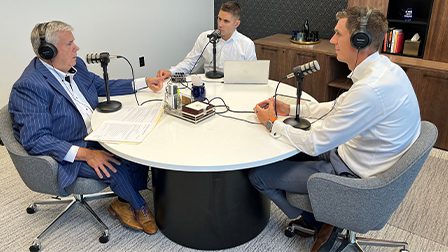
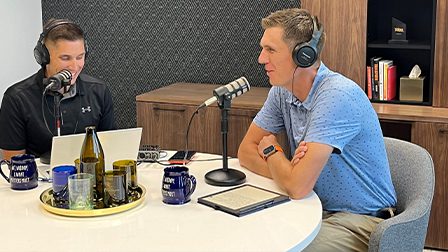
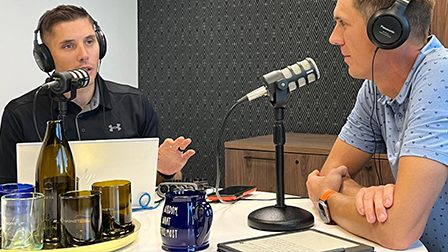
And welcome to another edition of Wit, Wisdom, and What Matters Most. It’s a podcast with Moneta’s Gast Freeman Troyer Racen Team. My name is Kyle Luetters.
I’m joined by Danton Troyer, Danton talking a lot about very honorable, amazing, exciting gifting today with a very unique resource that we happen to have right here at the firm.
Danton:
Yeah, I think Deb’s going to provide some insights, maybe just another way of thinking and maybe more in-depth thinking as far as just the philosophy around giving away money.
Kyle:
It was a far-ranging conversation. You’re going to hear quite a bit about who Deb is, Deb Dubin, Chief Philanthropy Officer here at Moneta, who she is, what she does, and some of the ways that you start to really begin to think beyond just the dollar sign when it comes to giving. So with that being said, here’s our conversation with Deb Dubin.
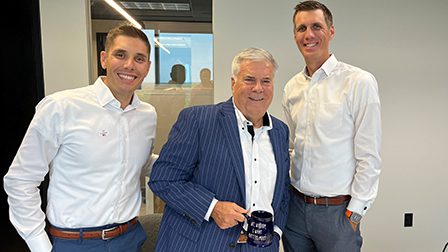
And we’re back with Deb Dubin here on Wit, Wisdom, and What Matters Most.
Deb, you are our Chief Philanthropy Officer here at Moneta. And first and foremost, that’s a really cool title, if I think about it, but how did you get to Moneta? I want to start at the very beginning. How did you get here before we get into the nitty gritty of what you do?
Deb:
Sure. Sure. Well, I mean, there’s personal and professional reasons why I’m here, but yes, Chief Philanthropy Officer, super unique to Moneta, which of course we know is an RIA. Most investment firms don’t have an in-house person who’s an expert on philanthropy. So I feel very privileged and lucky that the folks at Moneta decided we needed to have someone who could talk to clients about their interests and aspirations around philanthropy.
So how I got here was I was running the Regional Association of Grantmakers in Missouri. Very glamorous title of Philanthropy Missouri.
Danton:
That was an upgrade, I think, from the title, at least.
Deb:
Yeah. Yeah, Philanthropy Missouri. I was the CEO for eight years, and that was a collection of funders around the state. We started in St. Louis 50 years ago, and I grew it across the state. And we had about 70 members who were corporations here in town and in Springfield and in Kansas City – foundations, high net worth families, tax-supported foundations…all giving money away and wanting to do it in ways that were impactful.
Sometimes they want to collaborate, sometimes they don’t, but they all have a hunger for connection. So I ran that organization for eight years here in town, and during that time had the opportunity to interact with some of the partners here at Moneta when folks had questions and really kind of came to an obvious point, which is you guys could use someone in-house to work with clients on these things. So one thing led to another. I can name off partners who deserve the most credit, I’ve already taken them all to lunch.
But the idea is really thinking through how we help our clients. We know from studies that have been done nationwide that clients want to talk about philanthropy, and that advisors like you are the most trusted source of information about philanthropy after spouse, which puts pressure on you and also creates an opportunity for you.
Moneta also recognizes that multi-generational wealth, we have a lot of families who we steward their wealth, we help them navigate life’s path, that are multi-generational in nature. And one of the things that really works well when teaching stewardship to families is to have a conversation about philanthropy. Even when families aren’t ready to sort of open the kimono on inheritance, you guys talk about retirement, you guys talk about sort of thinking through what the future looks like and what legacy looks like. Some families aren’t ready to talk strictly about finances. Philanthropy can be a really nice entree into talking about stewardship, using language around we’re grateful, we’re thankful, we’re lucky, we’ve worked hard, and here’s your opportunity to help us do some really amazing things.
Danton:
Yeah, I think you touched on a couple of things that I want to certainly dive into. Sure. But why philanthropy?
How did you…
Deb:
Yeah, how did I get to philanthropy? Well, you know, again, personal and professional. I’ve had a lot of opportunities. I’m a lawyer by training and practiced law in a big law firm for years in San Francisco. And I also worked in government there. When we moved to St. Louis 20 years ago to raise our family, I made the segue to work…taught a little bit at Wash U. And I also worked on some political campaigns, but the bulk of my work was really working with an investment firm that invested in low-income communities through tax credits.
Then went into philanthropy because it seemed like a really neat way to merge knowledge of finance with impact in a broad way. And to help families to do so, I did some training. I have a CAP, which is a Chartered Advisor in Philanthropy degree. And I also did some other training. One course in particular is called 2164, working with multi-generational families. So I pivoted from working with organizations in my previous role that were giving money away to now working with families. It was a really nice progression.
So why philanthropy? That’s on a professional level. On a personal level, I was a young widow. I lost my husband seven years ago to cancer. And think a lot about legacy and think a lot about stewardship and how you memorialize people and how you keep them alive through impact. So one of the things we did when my husband passed away was set up a donor-advised fund in his memory. Folks contributed.
And then I have two boys now in their 20s and we are able to say to ourselves, you know, what do you want to do this year that reflects dad’s values and interests and beliefs and reflects our family’s interest in impacting the world and telling stories, right? Because we always want to tell stories.
So on a personal level, philanthropy feels like a great fit because I’ve spent a lot of time thinking about legacy.
Kyle:
No doubt. And what a powerful personal story as well, too, to really drive that. And that’s what we hear a lot of from folks.
You have brought, and folks are listening to this, they won’t be able to see it. You brought something with you.
Deb:
Oh, today for those at home and the home audience as opposed to the studio audience today. I did, I did.
Kyle:
Can you go through what you brought here? Because it’s a very unique piece.
Deb:
Well, thank you. Yes. Well, thank you. It’s a big ampersand. It’s made out of wood. If you think about that character on the keyboard that we’re all not sure what to use it for except for it represents the word “and,” right? The ampersand represents something really big for me with respect to philanthropy.
And so I lug this wooden ampersand, here’s what it sounds like, around, it’s heavy. I lug it around with me and I have smaller ones that I give to clients when I think they’re going to be fidgety in a meeting so they can take it home. I have a stack of them I got at Michael’s.
The idea of the ampersand is something that I actually learned from improv. I don’t know if either of you have done improv comedy, but you learn to say “yes, and…”
In other words, you take a situation that’s been given to you and you make it better. And you try to keep it funny and warm and keep the motion moving forward, but you’re not allowed to say no or pretend that that’s not what they just told you. You have to keep it going. It’s “yes, and.”
Kyle:
Okay.
Deb:
You’re elaborating on and you’re making better a situation. It’s the same with philanthropy.
We’re acknowledging that there’s abundance in the world. Those of us who are lucky enough to be clients at Moneta and are lucky enough to talk about philanthropy generally have, if not assets to give, we have time and we have talent. Right? Time, talent, and treasure.
The idea is “yes and.” It’s yes, I can be well stewarded by my wealth advisors at Moneta and I can also be a generous person.
And it will be different for every family. Some families that’s a couple hundred dollars or a couple thousand dollars a year. Other families it’s larger increments. Really, every family is different when they think about how they’re going to prioritize and we’ll get deeper into values alignment and how families think about their strategy around philanthropy. There is abundance in the world. I do believe that.
So, the idea is “yes, and…how can I be generous?” “Yes and…how can I do things that are both purposeful and purpose filled?”
When I meet with clients I tell them I really want you to walk out of here feeling purposeful, deliberate, thoughtful, tax-incentivized giving. Your financial advisor’s here because they’re hearing different things. They need to know what needs to be available and when, right? When the assets need to be available.
So purposeful, thoughtfull, and purpose-filled to me means meaningful. The idea is that what we’re doing is meaningful for you, for your family, for your legacy. It’s also meaningful for the nonprofits that you want to work with.
Some folks come to us and want to impose things on nonprofits that aren’t ready or don’t have a mission that aligns with what they want to do, and we take a deep breath and we say I love your enthusiasm and… let’s go talk to the experts because the nonprofit leaders are the ones in proximity to the problems and they know best what needs, what’s needed. So. we have a conversation. We really view our grantees, the folks we’re giving those dollars to, as funded partners and when you can have a conversation with an executive director and say, for example, “What can’t you get funded? I’d love to help you with something.”
It’s a whole new conversation and their heads explode if you offer general operating support which is, you know, giving them dollars to do what they need to do, what their priorities are.
Kyle:
Yeah, run the organization.
Deb:
And we learned a lot about that during COVID and we had to make some changes. Some funders had to make a lot of changes around how they allocated dollars and the idea again is doing it in consultation, making it a meaningful and transformational gift.
Again, the amount may range. It just shows that you hear, you hear that executive director telling you here’s what we really need and I’ll give you an example. We had a client who really loves early childhood education and feels that if you can intervene when kids are tiny, those little brains are still developing, you can change the trajectory of a child’s life by making sure you’re investing in early childhood, right? And those of us with kids understand that that actually is a really powerful time.
So they wanted to give healthy snacks to a preschool located in a low-income neighborhood that they thought was doing really well. They wanted to give healthy snacks. I said, great, and I touched my ampersand.
They said, well, maybe a, maybe a tricycle for the large motor room. I said, great, and…and I explained to them that you can be an immediate donor. You can give something that’s going to help kids today. That’s great. You can think about capacity building and help them.
If you think this is such a great preschool, you want to help them build another classroom, right? Where they can have another teacher; they can serve 15 more kids.
And if you believe in systems change and you’re looking a generation into the future or maybe hopefully a decade into the future, you can work on advocacy and policy. You can lobby in Jefferson City or support organizations working in DC to create more affordable, safe childcare seats.
And every client has an idea about what their time horizon is for change. So you have to match and help them think about that alignment. So for many of us, it’s immediate. We want to touch and see and feel the impact.
And that’s great. Others are more patient. You know, it’s the whole idea about when the best time is to plant a tree, right? And people say, well, 25 years ago. What’s the next best time? Today, right?
So, some folks have a longer time horizon. When I worked as the CEO at Philanthropy Missouri and many of my clients were corporate, they needed more immediate impact. They were rolling up that data into a corporate social responsibility report and they wanted to tell their shareholders, right? And their other stakeholders, here’s what we were able to do this year. This is how many trees we planted.
We know that some people with family foundations or donor advised funds, and we’ll get into that in a minute, have more patience about outcomes and they can wait five years or eight years or 10 years to see the fruits of their labor.
Back to the story about the early child care center, we talked to the executive director. We called her and said, we have a client that wants to give you healthy snacks. How do you feel?
She said, “That’s fantastic, thank you. And… I can do a GoFundMe and get healthy snacks,” which by the way, they did; I was a contributor.
What they can’t get, we said to her, what is it that you can’t fund? And she said, “I can’t find anyone to fund professional development for my teachers.” She said,”They make $12 an hour. They could make $18 at Arby’s down the street, but they stay here because they love kids and they love what they do. And if I could get a small grant for professional development, a couple of things will happen.”
She said, “Number one, we invest in their career and they know that we care, that they are professionals and that they are growing their skillset. Number two, they’re better with the kids. They know more about child development, right? And number three, we stay accredited.”
You know, all these things. So, the idea is that when you ask an executive director, what is it you need, and you say to them that you maybe can’t get funded elsewhere, it creates this whole new situation, this whole new dialogue.
And I have a client who’s doing a lot of this. Maybe we’ll tell some stories later about the nuns. Bring it up. But we’ve had some really, really neat nun stories this year. I have a client who loves nuns.
Danton:
I mean, it sounds like your approach is definitely tailored to the individual, for sure. Not only the family, but also the organization that needs the help, as well.
Deb:
For sure.
Danton:
And, you know, I’m probably, we were talking about the peanut butter analogy, I mean, I just donate, but I, yeah, I give thought to it, but certainly not at that level. And so how do you help families really start to just think maybe deeper about their giving?
Deb:
Sure. Sure, that’s a great question.
And I think peanut butter might’ve been off camera. So I’m going to tell folks about that right now. We have a lot of clients who come to us and they feel either guilty or dismayed or upset that they’re doing what they call, what I call peanut butter giving. And if you could see me right now, you would have, see one hand that’s flat out and I’m showing what this smushing of peanut butter is. It makes it thin, right? It spreads it thin, like on a piece of bread.
And so that’s because we’re giving $150 to a cancer charity because someone asks us to. We’re giving $150 to the Girl Scouts. We’re supporting our kids’ PTO. We’re doing a quick check to the symphony.
Those are all transactional gifts and they are wonderful, right? Our community needs those to thrive. And I always encourage our clients to realize we want our community to thrive. So we keep making those transactional gifts.
And… the other hand is out now and I’m going from a transactional hand to a transformational hand. The idea is that we are going to make some gifts that are transformational in nature.
And I’m not talking necessarily just about assets, right? We’re talking about time, talent, treasure. Maybe you serve on a board, or you donate a lot of hours to an organization.
The idea is you’re making a transformational gift that is unique to you, to your family, and to the nonprofit. That they’re able to use that gift in a way that you are the best person in the world, best situated to kind of make that gift. So again, it could be $5,000, it could be $50,000, or it could be $50 million. We have clients that do that.
The idea is you’re doing something transformational in addition to your smaller transactional gifts. And don’t ever feel guilty about those things.
With respect to each family, thinking about their focus, that’s sort of where we start. When folks come in, you have to be a client of Moneta, and I’m sort of a value-added benefit. You come to me and we talk about…we do a discovery. You know, not unlike your financial discovery, but in this case, it’s a philanthropy discovery. We talk about a family. We talk about your roots. We talk about the base of your tree. We talk about the branches and what you carry, based on the history of your family and the stories that you’ve been told and the stories you want to tell.
So we’ll talk through discovery looks like, tell me about the things you’re involved in now and what’s been satisfying for you. We’ll talk about what concerns you might have about, you know, inheritance issues or legacy issues. We’ll talk about whether you have done some planning and there’s planning in place. And we’ll talk about vehicles.
It’s really important for your financial advisors to be part of that initial discovery because they are the ones who are thinking about everything from tax-incentivized and using the right vehicle, right? That purposeful stuff we discussed, to making sure that the right resources are in the right place at the right time when you need those.
So, we do a discovery process and we go from talking a little bit generically about their family and their stories to talking about what values they carry, right? What are the things that are most important to you? And I have some exercises that we do that are fun. We talk about values, what values you carry. Some families immediately say faith or patriotism or they say things like, you know, social justice, or they say conservation. Every family is different, right?
What we try to do is triangulate around some values. And then we also talk about buckets of interests. Some families are really interested in the cancer moonshot, helping to cure cancer. Some of them have been affected by it.
Other families are focused on the environment or they’re focused on young kids, safety net issues, or adoption or a specific disease their family has been affected by.
The idea is every family is different and what we try to do is define those buckets in a mission statement. And we try to pull that together in alignment with those values. And then we test it. We test the theory.
Many clients have thought about what they want to do after they’re gone with their philanthropy, right? And what I always encourage them to do is kick the tires while they’re living, right? First of all, we see the need in the world where we are today.
And second of all, it’s really fun. And I will say that that is the most important thing. If I leave you with nothing else today is we want to make this joyful, right?
For some people, it feels like a burden. You don’t want to make the wrong decision and you’re afraid to take that first step. We encourage folks to try it.
I mean, philanthropy is so joyful and so much fun, and it is a risk – you’re giving money away. And if you do the work ahead of time and the best work you can do is, I always say you want nonprofits to be sustainable, transparent, and well-led. And I teach clients what those mean and how to figure that out. The best homework you can do is to literally go and touch and feel and see it in person, right?
You can always look on a website and see how something’s evaluated. Charity Navigator is one of those, if those folks aren’t on the ground here in your community. And when I say your community, we’re not limiting this to St. Louis. Clearly, we work with clients across the country. You have clients across the country and we’re able to personalize this and customize this to those folks, as well. So, going and kicking the tires in person, knowing someone on the board, getting to know the executive director over coffee and asking those questions, right? What’s going on? What are your latest initiatives and how can I help?
Kyle:
Perfect. So that was a great overview as to like how you get spooled up working with folks and kind of taking a look at the, you know, kind of the underpinnings of this. Walk us through, like maybe some stories here. We’re going to get to the nuns here in a minute. I’m not going to walk away.
Deb:
I’m just putting an image in your head of nuns at a winery. We’ll take it from there.
Kyle:
There you go.
Deb:
Yeah.
Kyle:
Long-term, like what do the relationships look like? What do they form over time as you work with these families over, over years and maybe generations?
Deb:
Sure, yeah.
Kyle:
How do you walk with them in that regard? Cause I think that’s one of the most fascinating aspects of what you do.
Deb:
It’s really fun when you do the multigenerational work and oftentimes it starts with a family meeting and we set some ground rules that everyone generates about how we’re going to participate; how we, how we trust each other, how we learn, how we give everybody time and space. And then we jump in and we do a family tree exercise so that everyone knows who everyone else is in the space, what we carry. A lot of times families have different ideas, even generationally, about what’s important. And so we try to find, you know, I’m a big fan of Venn diagrams. Like what’s that overlap between the dad who’s a big entrepreneur and believes in making sure everyone can learn how to fish and maybe the next generation that feels really strongly about supporting entrepreneurs who maybe wouldn’t get it, wouldn’t get an opportunity – opportunities in underserved areas. I mean, you can find commonality or conservation is often a great one for a family with hunters and a family that loves clean air, clean water. You know, you find a spot that is that Venn diagram of overlap if they want to work collectively. And the best families, the families that seem to do this the best, are the ones that allow individuals to make choices on their own, too, and recommend them back to the family for giving.
Danton:
Yeah. So I mean I was, that was what I was curious, kind of reading your one page here is on the family meetings. What would a family expect to get out, especially with multi-generational and what does that process look like when you’re starting to include, I mean you talked a little bit about it, but just what’s the goal of this?
Deb:
Yeah. Well, the goal is to get everyone on the same page around stewardship and the idea is for the, if it’s grandparents, for them to talk a little bit about how, how, what’s the source of this wealth, right? Not just in wealth, not just money, but wellbeing and what their wishes are.
Our wish for you is that this money be used to enhance lives, right? And never to be used as a weapon, but to be used as something that keeps us together and allows us to have a flourishing, healthy, happy life.
For some families, it’s going to be about faith. They’re going to talk about their faith.
For other families, it’s going to be about the source of wealth, or the location or the place where grandma and grandpa grew up. They want to have some ties. They want to have a fruitful, healthy, happy…
Remember, you know, by third or fourth generation, a lot is owned in trust, a lot is owned collectively in these wealthy families. And the idea is let’s teach folks how to work together.
Um, and philanthropy can be a great way to start working together to a common end. So we develop a mission statement. People kick the tires on the mission statement and decide if it fits. And then we just cover whether or not giving, you know, is something that the family wants to do. And if so, we’ll set a budget. A family will go out and do their research and their due diligence. And every family operates differently. Some will have the kids come back and make presentations. Um, there’ll be a vote and then they’ll deploy the money and they learn.
You always want to look back and say, what did we learn from this experience? And you revise the system the next time around. So ideally, the families are doing this themselves with a little bit of help from us. And certainly there’s tons of resources out there that we can give them. There’s workbooks, there’s, you know, exercises we can help to get them on their way.
Some folks are really eager to jump in and others just kind of want to soak on it, soak it in. So, you can’t, you can’t really want it more than they do. In the beginning, I remember when I started, I was so impatient for people to start getting going.
And sometimes it takes time. I have clients – I’ve been here a little more than four years now – and I have clients who are circling back. We met two or three years ago and they’re like, okay, we’re ready now. I had a client meeting like that last week. They said, we talked in 2023, we weren’t ready. We’d love to get going now. And let’s talk about some of the ideas we have.
So again, it’s letting it sit for some time to let people absorb it. It’s also not always a priority, which is understandable.
So the idea is that you’re creating a platform and a method for folks to engage if they want to engage. And they’re really driving what that engagement looks like. Again, if it’s time, if it’s talent, if it’s treasure, if it’s some combination of all those things, helping them navigate that with the primary relationship, being their wealth advisor.
I’m here to support.
Danton:
Perfect. Have you tried, the best way, you know, maybe not importance, but between working with first generational wealth and you also mentioned the generational coming through a trust, as well. And does that change the process or the way you work with them? Or what’s the differences you’ve seen there?
Deb:
Yeah. You know, there’s some generalizations that you can make about the earning generation and then sort of the maintaining and then sort of the spending generation. I do think though that every family is different and it really, I see that over and over.
We have a lot of first time, first generation entrepreneurs who are clients here who have incredible humility. They’ve worked incredibly hard and they’re incredibly generous, right? Others who feel it’s their job to kind of keep the capital together to support the family.
And it’s really a lot about, it is about money messages that we receive as young children about what money is for and how to use money. And a lot of us have ideas about abundance and scarcity. And generationally, if you grew up with your parents having gone through the depression. And so you’re in your 70s now or 80s, now you have a very different idea about what money is because you were raised differently in abundance versus scarcity mentality. But again, I think it really just comes down to individuals.
And so part of my job, and our job as advisors, is to understand that really underlying approach to money, whether there’s anxiety, whether there’s not enough attention being paid, right. Once in four years, I’ve had to tell a client to stop giving money away and we didn’t want her to run out, you know, but that’s pretty rare. Mostly the clients we have are pretty well-aware that they are able to allocate money fairly freely. There is abundance and they also are being advised by their wealth advisors, like folks on your team, what is the best way to do this from a tax standpoint and from a strategy standpoint? And so they’re well-served. Moneta is really well-equipped to help them understand both sides of that equation.
Kyle:
I’d like to drive back just a second. We’ve talked quite a bit, with giving money. I’d like to see if you have some stories of how you have worked with folks where it started out as, Hey, I think I’m going to give some money and then maybe it morphed into, Hey, this is really cool.
Now I’m going to start to give some more of the other Ts, the time and the talent. Have you, have you kind of seen a genesis in that in some people?
Deb:
It works both ways.
Kyle:
Okay.
Deb:
Folks who have been involved for a long time as volunteers somewhere are really convinced that it is an organization that they want to bring some capital, bring some assets. Or they’ve inherited money and now they’re ready and capable of being a donor in that way.
And then yes, the other way works, too. A lot of times I’ll take clients on site visits. We’ll go in person to go meet an executive director to take a tour. Um, in the past three months, I think I’ve been to, you know, half a dozen different nonprofits to walk that path with a client who wants to see it, touch it, feel it, meet the people involved. All of them have culminated in gifts.
I think it makes a big difference when you find an organization that understands that trust-based approach. I call them ahead of time and I say, we don’t want a song and dance. You don’t need to show us a PowerPoint. We really want to walk and talk. We want to see what you’re doing on the ground and also make it really clear I’m not trying to create more work for you.You’re a nonprofit executive director. You have plenty to do. Please don’t do anything special for us, right?
We want to come in. We want to see Ranken Jordan Pediatric Hospital, just what you do all day. We want to come see Ronald McDonald House and what you’re doing for families every day. We want to go, you know, walk this, this park that you’re talking about doing a, doing a playground. And we want to see without having to be a burden on your operations.
So we go and we see, and we look and we touch and we feel, and sometimes clients will decide they want to become a volunteer there or they want to serve on a board. If there’s availability to do so, the nonprofits love it. And other times they’re like, I want to make a gift and I don’t even want anyone to know it was me. So part of the approach is talking to the clients about what they want because sometimes these gifts are anonymous, right?
So you have to always make it really clear that with the client, what kind of attribution are you interested in, if any? Some folks want their name on a building. Other folks don’t even want to have their name on a gift that would go in a brochure. It just depends. And sometimes people differ depending on the organization.
So, we find people come to us a lot wanting to do things out of gratefulness, for example, for the hospital, for a specific disease, for a specific organization that helped them in a time of need. And that’s always really interesting too.
And then you have people who love to read and they want to know what are all the literacy organizations in town. I’d love to buy books for kids.I think reading is the most important thing that ever happened to me. So people have different preferences.
One of the exercises I do with clients, and I could have brought the deck with me today, but you know, you may have seen it before. It’s an image deck; it’s about 62. It’s from the group called 2164, just a group of images. And we’ll spread it out on the table and I ask everybody to pick two or three that resonate with them. Don’t overthink it; it doesn’t have to be literal. But it’s everything from a hot air balloon to a dictionary, to a megaphone, to a beautiful park. And it’s just a whole mix, cats and dogs, you know, kids running a road race and pick a few cards that resonate with you and then we’ll talk about how that’s showing up in your life.
And what comes out of that conversation, especially if you have members of the family who maybe are shy or maybe are younger and they don’t speak, everybody can participate in it. It’s called Picture your Legacy; everybody can participate in an exercise like that.
And what happens is they’ll pick a card and they’ll all of a sudden say, I was drawn to this because this is a person getting healthcare at a nonprofit health clinic. And I think that’s really important. Health is really important.
Well, what does that look like in your life right now? And how can we find a way, how can Moneta help you think about a way that you could be a contributor in that way?
So, we do the Picture your Legacy card exercise and a lot of those discovery meetings to enable people to really think through from an initial standpoint, what resonates with you.
Art supplies, there’s a picture of art supplies – a lot of times people will pick that one or the cats and dogs is probably the most popular. You know, everyone who’s a kid picks a cat and dog one. And we talk about how you can, even at a young age, you can be a volunteer at the Humane Society and things like that.
We also help families integrate, in addition to talking to them about the vocabulary that they use around their kids by saying grateful, blessed, lucky, whatever your tradition is, we worked hard. We have many resources because we are a lucky family and we want you to be able to be aware of that.
We also have exercises people can do with kids starting at a very young age. Kids can start being exposed to philanthropic adventures, I would say. So sometimes that’s like grandma and grandpa take you to the bookstore and while you’re there, you pick out your favorite book and they also pick out a book that you pick. They purchase a book that you buy and you guys donate it. So when you go to the bookstore with grandma and grandpa, that’s the activity is picking an extra book. Cause not everybody can afford to buy a new book for themselves. You can drop it in one of those little tiny libraries or find another way to donate it.
Another one is apple picking. My clients really like this one. When you’re going over to Eckert’s in Illinois – that’s where people go from here in St. Louis, there’s a lot of other places to go – and you’re picking apples, pick an extra bushel; have the kids pick an extra bushel. First of all, you have to explain to them what a bushel is, right? None of us really know.
Danton:
Yeah
Deb:
And they love picking the apples. And you say to them, you know, we’re going to pick an extra bushel of apples when we go to the apple orchard. Cause not everybody can get fresh apples and we love apples.So we’re going to share.
So you’re not beating them over the head with an activity that becomes forced; it’s something they’re already doing anyway. On the way home – and I know this is possible cause I called around to a bunch of the food pantries – with them in the car, you drop off the bushel of apples at the food pantry. Now maybe you don’t go inside if they’re not capable or if you can’t, but the idea is that you are showing them, we got these extra apples and we’re now donating these apples because you picked them.
I had a client who shared with me six months ago, they were on the highway getting off the off ramp at Kingshighway and 40.And there was a homeless person who had a sign and they heard a little voice pop up from the back seat and said, mommy, do you think he got one of our apples? This was months after the family had done that activity. The kids listen, they remember, and they understand if you explain it to them.
And again, it’s not beating them over the head. It’s not saying, you know, you need to constantly be thinking about this. It’s, we’re going to integrate this very lightly and genuinely and authentically into activities we’re already doing.
So some people use the Heifer catalog. I don’t know if you’ve ever seen that, it’s a catalog where you can adopt chicks or goat for families abroad and the kids get excited about picking something in the catalog. The eggs from the chickens allow the kids to get school fees and go to school. And so those are things some families use and some families will do. World Wildlife Federation that you can get a stuffed animal and then you’re sponsoring that seal or you’re sponsoring the manta ray or the whatever. Some of the animals are really, really gross, but the kids love them. They love them! And then you get the stuffed animal in the mail and it’s just a representation of something that you did a good deed.
So there’s ways to do that with families and, and I will just end by saying that’s something else we work with families on is how do I get my kids to understand this is pretty special.They are special. We are special and the world is a special place and we want to make sure that we’re helping them walk on that planet in ways that are gentle to the earth.
And so we talk about, again, sustainability, making sure organizations that we pick have a plan and if they don’t, maybe that’s what you fund is a development director or a fund for them to be strategically transparent. We want to look at their tax returns. You know, every nonprofit has to file a tax return every year. If they’re making over a certain amount of money, they have to disclose a lot of information, including salaries. Anyone who’s paid over a hundred thousand dollars, it needs to be disclosed. So you can take a look and see, some people are trapped in this mentality of overhead ratio, like I’m not going to ever give to an organization that has, you know…
And I think that’s a good red flag, but I also want to caution people that models look different. If you’re paying for a mammogram van with medical professionals to go around and deliver free mammograms, that’s going to be different overhead ratio than if you’re distributing free books from an organization that gave them to you for free. Your models are going to look different. So you have to weigh a lot of different things when you’re thinking through what that overhead looks like.
And the last thing I’ll say is every organization needs overhead. You know, you need professionals who are really good at what they do. You need electricity, you need heat, you need an office in some cases. You have to really think through what that looks like. Now, if all they’re doing is fundraising, that’s a red flag. So again, that transparency is about things like tax returns and when you ask questions, they’re really forthcoming, happy to show you their budget.
And then well-led is that third leg to that stool. Leadership’s everything. I trust good leaders to make good decisions. Even if it’s not a decision I would have made, they’re basing it on facts; they’re basing it on proximity to the issue. And hopefully if they’re seasoned and robust, they’re not basing it on ego. They’re basing it on what’s best for the clients, ultimately. So that’s why when I’m with our clients, I try to make sure if they’re interested in meeting with the organization that’s going to be the beneficiary of their grant, that we arrange that.
And there are some leaders in town who I really believe are just true, head and shoulders above leaders, I would even say in some of the private sector industries that we know and we appreciate and we invest in. And you know, these people are doing really complicated things with a lot less money. It’s amazing to see.
Kyle:
Oh, that’s fun. Yeah. Before we drive on out of here, I, we’re going to drive back to the nun stories.
Deb:
Yeah, I will.
Kyle:
So take us on out of here with some of these nun stories that you eluded to earlier.
Deb:
Well, so that’s just one of many stories, but this happened last week. I happened to be able to see some pictures which really moved me. I have a wonderful client, a longtime client of the firm, who has sold a business and would like to distribute the bulk of that in charitable gifting. And is aiming to give away a couple million dollars a year. He’s grateful, he’s super grateful, and totally surprised that he was able to build a company and sell it.
And so he wants to do the bulk of this in generous charitable gifting and he came to me three years ago and said, I don’t know what I don’t know. And I’d love to have someone help me navigate this.
So I did this whole discovery process, figured out what was important to him. And slowly but surely we’ve been inviting him to meet with organizations that are aligned with his giving. One of the things he felt really strongly about was honoring the memory of a great aunt and an aunt who both became women religious and entered into different orders of nuns back in the day. He grew up in South City, came of age in the sixties, and was benefited greatly by family members. He, at one point his family needed to send the boys away because of a family crisis and he lived, they actually lived, in the nunnery. So we tracked down the order that his great aunt worked for. We talked to the lay leader and he said, how are they doing? How are these women doing? Well, they’re all in their eighties at this point. Sadly, the nuns aren’t replenished as much and they’re tough ladies. They’re so smart and they’re so wonderful. And they, this particular order lives in a, what I’ll call a mother house, with many of them are wheelchair bound. And we went and met with the lay leader and said, what do they – he’d like to do a gift for the sisters, he’d like to do something special for them. What do they need?
And she said, I’ll ask them. She went back and asked the sisters. She came back to us and she said, they said, if you gave them a six-figure gift that they would distribute it to the poor, because that’s their mission.
And he said, no. Instead of listening, which we always teach people to do, he said, I want to do something for them. I want to do something that no one else is going to do that really would help them with quality of life.
So she went back to the sisters and said, we want to do something for YOU. So they came up with the idea of a handicap accessible van, which you can wheel roll wheelchairs into the back. So you’ve got an 80-year old nun driving at the steering wheel, and the ones who rolled in the back, and they are the nicest, most interesting people.
And he goes that day, he said, DONE! He bought them a van, a handicap accessible van and with a little extra money for maintenance and fees and registration.
He went to visit them the day that the van was being delivered and they were so grateful. And he said, sisters, where are you going to go? And they said, we’re going to Dunkin Donuts.
Subsequently, and this is what makes it so much fun, it’s been a year. They sent him an album at Christmas with pictures from every field trip. There are 25 different field trips that they went on with this van. They kept track of everywhere they were able to go because of his gift. And there’s pictures of them at a winery in Augusta. There’s pictures of nuns at the Anheuser Busch Brewery with – no, sorry – at Grant’s Farm with a Clydesdale. There’s pictures of them at the art museum. There are pictures of Dunkin Donuts. They are, you could see where they went a couple of times by like what they really liked. You know, they went to Kaldi’s three times, they went a couple of places three times.
But they also went to doctor’s appointments, which they couldn’t have done in the wheelchair transfer, the ones on oxygen. They also went to do mission-driven work and they took a trip to Cleveland to see their long – they would never have seen these women again – these sisters of theirs, part of their order, who live in Cleveland. So they took a picture of the road sign on the way to Cleveland in the van.
So they are able to do something really remarkable that honors their service, their life of service, because this gentleman took the time to listen. What do you really need? And so his gift, I mean the fact that they took pictures and all wrote him thank you notes, by the way, not all nuns have great handwriting, some of them were not, but they’re in their eighties and nineties. But they were so lovely. The fact that they wrote these letters to him and took time to really say to him and his wife, you did something that is meaningful for us and that has lifted us and we bless you. That’s a great example of something that’s, I’m so proud for him and I’m so proud for Moneta for helping facilitate this.
And you know, that’s just one example of many, many examples of things we’re able to help clients do when we listen.
Kyle:
Well, Deb, I can’t think of a better, more fitting way to kind of close this out than that story right there. Just from the sheer impact of that and getting to see the entire thing come to fruition.
Deb:
That’s right. That’s right. And you know, we obviously hold these conversations in confidentiality, which is why I haven’t revealed the client or the order of nuns. I asked for permission to share the story, of course, today.
But I want to also remind you that with our clients, it’s a sacred trust. And I start every meeting by saying it’s a small town; we may know people. I want you to know that what happens in this conversation is completely confidential until you’re ready or until you tell me you want to talk about it more publicly. And I think that’s really important, too, is to recognize that some families are very private and don’t want, and they’ll use us as buffers for example, or as the liaison, because they don’t want to be upfront. So I want to also just mention really quickly that it’s a privilege and an honor to have these conversations with clients. And just as you wouldn’t be discussing their finances, we’re not discussing their philanthropy outside the house until the families are ready or choose to do so.
Kyle:
That’s a good point. Well, it’s been a privilege and honor. Thank you for being with us today. This is awesome and so insightful.
Deb:
My pleasure, thank you.
Kyle:
And you just heard from Deb Dubin. And Danton, what a conversation! So far-ranging and I really wish folks could have seen, not to be a little bit too crazy here, but the sparkle in her eye when she really got the chance to dive into the process that she goes through with these families and how this entire thing comes together. It’s really, just really cool.
Yeah. I mean, there’s so much more to just philanthropy and I’ve worked with nonprofits and boards across the table, and there’s just so much more to it. And having someone like Deb here at Moneta and just to be able to help clients.
And I was talking to her after we got done talking with her, as well about my personal stuff and it’s just a great resource in someone that can really help them just put more thought behind it because we’re all busy in our day-to-day lives. And really, we want to be impactful, but sometimes, you know we just write the check because your friend asked you for a sponsorship, but there’s more you can do if you want to.
Kyle:
And what I really liked was she talked about, among many things was, we spend so much time on the dollar figure or the way she put it, the treasure, but there’s also time and talent. And oftentimes to your point, there’s several organizations we’ve given money to. I really have to watch when I do home improvement projects because the Boy Scouts are hanging out right outside the exit of Lowe’s, among other places.
And, and we’ve all done and given money to when it’s there and it’s transactional. But really, when you start thinking about true impact and, generationally it’s the planned giving, but it’s also giving of your time and your talents, like you’re serving on a board, like what we were talking about her. I thought some of those were some of the most interesting and fruitful conversations, honestly.
Danton:
Yeah. I mean, I would just add the having those conversations with children in a fun way, as well. And the ideas she provided, they’re great. I mean, I could easily go home and do those with my kids. And again, you just get busy and sometimes you just lose sight of those opportunities.
Kyle:
Yeah. Speaking of, there were a ton of opportunities that Deb presented here. If it’s ever on your heart and whatnot, seek someone like Deb out that can help kind of galvanize and put a plan in place around that charitable giving.
Danton as we kind of head for home, any final thoughts on this one? I mean, I thought the nun story was just a perfect way to land the plane.
Danton:
Yeah, I mean, just the impact that he was able to have with those dollars rather than, he could have easily just written a check and kind of said, do whatever you want and we’re done here.
But to go that step further and just really that impact was above and beyond.
Kyle:
Yeah, hopefully and that’s a key whole memory, at least for me on this podcast, and hopefully for you all as well, too.
This edition of Wit, Wisdom, and What Matters Most is a production of Moneta’s Gast Freeman Troyer Racen team, headquartered in St. Louis, Missouri.
Until next time enjoy what matters most!
Investment advisory services offered by Moneta Group Investment Advisors, LLC, an investment adviser registered with the Securities and Exchange Commission. Registration does not imply a certain level of skill or training. The information discussed in this podcast is for informational and educational purposes only. You should consult with an appropriately credentialed professional before making any financial, investment, tax, or legal decision.
© 2026 Advisory services offered by Moneta Group Investment Advisors, LLC, 190 Carondelet Plaza, Suite 1200, St. Louis, MO 63105 (“MGIA”), an investment adviser registered with the Securities and Exchange Commission (“SEC”). MGIA is a wholly owned subsidiary of Moneta Group, LLC. Registration as an investment adviser does not imply a certain level of skill or training. This is an advertisement. The information contained herein is for informational purposes only, is not intended to be comprehensive or exclusive, and is based on materials deemed reliable, but the accuracy of which has not been verified. Examples contained herein are for illustrative purposes only based on generic assumptions. Given the dynamic nature of the subject matter and the environment in which this communication was written, the information contained herein is subject to change. This is not an offer to sell or buy securities, nor does it represent any specific recommendation. You should consult with an appropriately credentialed professional before making any financial, investment, tax, or legal decision. Past performance is not indicative of future returns. You cannot invest directly in an index. All investments are subject to a risk of loss. Diversification and strategic asset allocation do not assure profit or protect against loss in declining markets. These materials do not take into consideration your personal circumstances, financial or otherwise. Trademarks and copyrights of materials linked herein are the property of their respective owners.
© 2025 Advisory services offered by Moneta Group Investment Advisors, LLC, 100 South Brentwood Blvd., St. Louis, MO 63105 (“MGIA”), an investment adviser registered with the Securities and Exchange Commission (“SEC”). MGIA is a wholly owned subsidiary of Moneta Group, LLC. Registration as an investment adviser does not imply a certain level of skill or training. This is an advertisement. The information contained herein is for informational purposes only, is not intended to be comprehensive or exclusive, and is based on materials deemed reliable, but the accuracy of which has not been verified. Examples contained herein are for illustrative purposes only based on generic assumptions. Given the dynamic nature of the subject matter and the environment in which this communication was written, the information contained herein is subject to change. This is not an offer to sell or buy securities, nor does it represent any specific recommendation. You should consult with an appropriately credentialed professional before making any financial, investment, tax, or legal decision. Past performance is not indicative of future returns. You cannot invest directly in an index. All investments are subject to a risk of loss. Diversification and strategic asset allocation do not assure profit or protect against loss in declining markets. These materials do not take into consideration your personal circumstances, financial or otherwise. Trademarks and copyrights of materials linked herein are the property of their respective owners.